
The forces shaping life and annuities in 2026
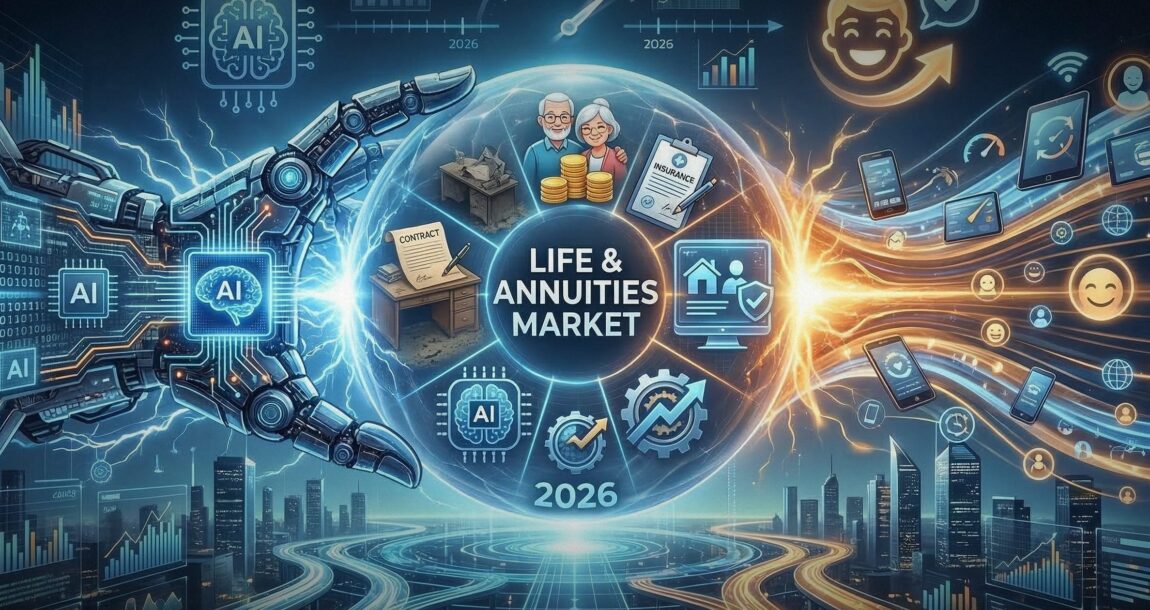
If 2025 was the year of accelerated digital adoption in life insurance and annuities, 2026 is shaping up to be the year that acceleration turns into alignment and permanent transformation.

Last year, carriers, distributors and advisors moved beyond experimentation. Digital tools became embedded across underwriting, distribution and service. Buyers became more informed, more self-directed and more demanding, with expectations of seamless, transparent experiences comparable to what they receive in other financial services sectors.
But the urgency behind these shifts runs deeper than technology alone. The retirement preparedness gap in the U.S. remains profound, and it’s reshaping what consumers need from insurers and financial professionals. A recent National Institute on Retirement Security analysis of census data found that the median retirement savings for working-age Americans is just $955 when including those with no savings. Yet even among workers with defined contribution plan savings, the median balance is only $40,000. Those figures underscore why lifetime income, protection solutions and modern planning tools are becoming more central to the financial conversation.
Meeting this need at scale will require more than incremental upgrades. It will require modern, data-connected platforms that use artificial intelligence to simplify the buying journey, personalize guidance and product fit, and help advisors engage customers with greater speed, clarity and confidence. In 2026, the focus is set to move beyond digitizing individual steps and toward reinventing the end-to-end operating model. The forces shaping the next chapter of life insurance and annuities will test how quickly carriers, distributors and advisors can modernize workflow, data and customer experiences.
End-to-end AI requires a strong, modern data foundation
AI is rapidly expanding from isolated efficiencies into an across-the-board accelerator, touching everything from application intake and underwriting triage to product engineering and recommendations. However, the real change for the industry doesn’t come from hype or buzzwords, but from improved speed and momentum. Tasks that once took weeks or even months can now be compressed into days, reshaping both customer expectations and operational reality.
But here’s the catch – AI can only scale as far as your data foundation allows.

In 2026, many carriers and distributors still risk hitting the same barrier: If data isn’t connected, standardized, permissioned and governed, it can’t reliably power AI-driven workflows, especially when a customer journey spans multiple steps and partners. The winning firms will make unification and governance the foundation for meaningful automation and intelligence, instead of tacking AI onto legacy systems and infrastructure.
Hyper-personalized product and journey designs
With a stronger data foundation, AI can do more than speed up the process. It can make the experience feel more individualized to each specific customer and their long-term financial planning needs. Carriers are increasingly personalizing premiums, coverage levels, and underwriting pathways based on geographic, demographic, and behavioral signals.
In the near term, the biggest gains will come from personalization that improves relevance and confidence by helping the right customer see the right option at the right time. This reduces dead ends and guides decisions through simpler, clearer digital journeys. That kind of personalization can make life insurance feel more accessible without rebuilding every product from scratch.
Over time, the industry may push toward modular, configurable approaches, but regulation will influence how quickly the most dynamic product-level personalization becomes reality. The priority for the coming year should be to build out capabilities, so that organizations are ready to move faster and deploy personalized strategies more aggressively as frameworks evolve.
Distribution is becoming smarter and data-driven
As AI leads to increased workflow speed, and personalization promises improved relevance and clarity, distribution becomes the next place the industry can turn intelligence into measurable growth.
Distribution is moving from broad outreach to precision engagement, with AI accelerating that shift. Instead of casting a wide net, advisors can use data-driven insights to focus on where demand is strongest, which households are most likely to convert, and what next-best actions will improve both placement and persistency.
At the same time, speed is becoming a real competitive differentiator. As distribution consolidates and new selling models emerge, carriers face growing pressure to support quoting, underwriting and issuance quickly enough to keep customers engaged in the moment. For advisors, the push for faster, data-led distribution strengthens their role rather than diminishing it. Technology should help advisors translate complexity and more confidently guide decisions – reducing the time they have to spend chasing status updates or explaining delays.
Shifting wealth and retirement demographics are reshaping annuity demand and advisor toolkits
AI, personalization and data-driven distribution are changing how the industry operates, compressing timelines and making experiences more targeted. But even perfect technology doesn’t create demand on its own. One of the biggest forces in 2026 is centered on who’s entering retirement, how wealth is changing hands and what’s still missing from Americans’ retirement planning puzzles, placing lifetime income at the forefront of financial conversations.
The Great Wealth Transfer from baby boomers to millennials and Generation Z is reshaping who is making retirement decisions and what they expect from the process. At the same time, Peak 65 demographics are expanding the pool of households actively planning for retirement income, helping sustain record demand for annuities. LIMRA projects U.S. retail annuity sales will finish above $460 billion in 2025, marking the fourth consecutive year of record sales, and forecasts that 2026 sales will remain above $450 billion; a clear sign this momentum is here to stay.
What’s driving that momentum is not just rates or product cycles, but a changing buyer – one who expects clarity and control. As younger generations inherit and assume greater financial decision-making power, they bring digital expectations to the process, but they’re not necessarily risk-seeking. Amid ongoing economic uncertainty, many are looking for stability. This keeps guaranteed income and protection features compelling, but only if the experience is clear, modern, and easy to navigate.
That puts real pressure on the advisory workflow. As a result, removing the friction that slows advisors down is the biggest opportunity in the year ahead. If annuities are to meet this moment, streamlined product selection, accurate suitability documentation and real-time case status will be paramount so fewer applications are bogged down in not-in-good-order follow-ups.
When that friction goes away, advisors spend less time chasing paperwork and more time delivering planning value.
Digital-first, ecommerce-inspired journeys are the baseline
All these forces converge at the most impactful point where customers, carriers and advisors actually feel them – the end-to-end journey from discovery and application through underwriting, servicing and ongoing planning.
In 2026, customer expectations are increasingly shaped by digital commerce, not financial services. If consumers can complete complex, high-stakes transactions online, including everything from cars to mortgages to investments, why should life insurance and annuities be any different? More importantly, the rising expectation isn’t about just a few digital touchpoints at the start, but about increased and reliable continuity throughout the entire buying journey.
Customers want their experience to feel clear and predictable, with simpler language, fewer surprises and visible progress from start to finish. Advisors need real-time case visibility and clean, guided next steps so they can stay in control of the client conversation, instead of chasing updates across multiple systems. That includes fewer NIGO setbacks, less back-and-forth after submission, and the ability to answer the basic questions of where things stand and what happens next without guesswork.
Carriers that deliver seamless end-to-end journeys will continue to lead by keeping the process connected through underwriting and servicing, with modern e-applications, real-time insights and consistent case tracking. The practical wins are straightforward: clearer requirements up front, earlier detection of issues before they become NIGO, and status transparency that keeps momentum intact. Legacy or disconnected systems won’t just slow teams down internally; they will show up as friction that drives drop-off, delays decisions and erodes trust at key moments in the buying journey.
The 2026 story evolves from acceleration to alignment
Taken together, the themes shaping 2026 are not separate trends but one connected story: AI, supported by stronger data foundations, is improving speed, personalization is raising expectations for relevance, distribution is becoming more precise and time-sensitive, and demographic demand is keeping lifetime income at the center of planning conversations. All this is done through a digital-first, ecommerce-centered lens that consumers increasingly expect.
As that intelligence scales, the non-negotiable requirement is confidence in the decisions being made and the outcomes being delivered. The organizations that will lead won’t be the ones that adopt the newest tools fastest, but the ones that connect data, workflow and experience into a coherent end-to-end operating model and can consistently explain a recommendation, requirement, or the needed next step.
Instead of treating modernization as disconnected initiatives – an AI workstream here, a digital project there – alignment through governed foundations, configurable platforms and digital-first journeys will be what delivers the greatest advantage.
The common thread of 2025 was acceleration; 2026 will define who can translate that acceleration into a durable advantage.
© Entire contents copyright 2026 by InsuranceNewsNet.com Inc. All rights reserved. No part of this article may be reprinted without the expressed written consent from InsuranceNewsNet.com.
The post The forces shaping life and annuities in 2026 appeared first on Insurance News | InsuranceNewsNet.